Gel Guides
Japanese Gel vs. Regular Gel: What's Actually the Difference?
Japanese gel and regular gel look alike on day one. Here's how the formulas, wear time, prep and price really differ, and which one fits your nails.
Key takeaways
- Japanese gel is a thin, flexible, highly pigmented soft gel, while regular gel is the standard bottle gel polish most salons use.
- Japanese gel often wears about a week longer, but nail growth, prep and daily habits matter most.
- Both systems soak off, and gentle removal with minimal filing protects the nail plate more than any formula.
- At our studio, Japanese Gel is $70 (about 60 minutes) and a Gel Manicure is $35 (about 45 minutes).
Japanese gel is a category of soft, soak-off gel polish developed in Japan that's typically thinner, more flexible and more richly pigmented than regular gel. It self-levels into a slim, glassy layer and often wears a little longer. Regular gel is the familiar bottle gel polish most salons use: quicker, more affordable and a dependable everyday choice.
Both are cured under a UV/LED lamp, both soak off, and from across the room they can look almost identical. The real differences live in the formula, the prep and how the finish behaves over the following weeks. We offer both a Japanese gel manicure and a classic gel manicure at our studio on Main Street in Port Washington, so here's how we explain the choice to clients at our table.
What is Japanese gel?
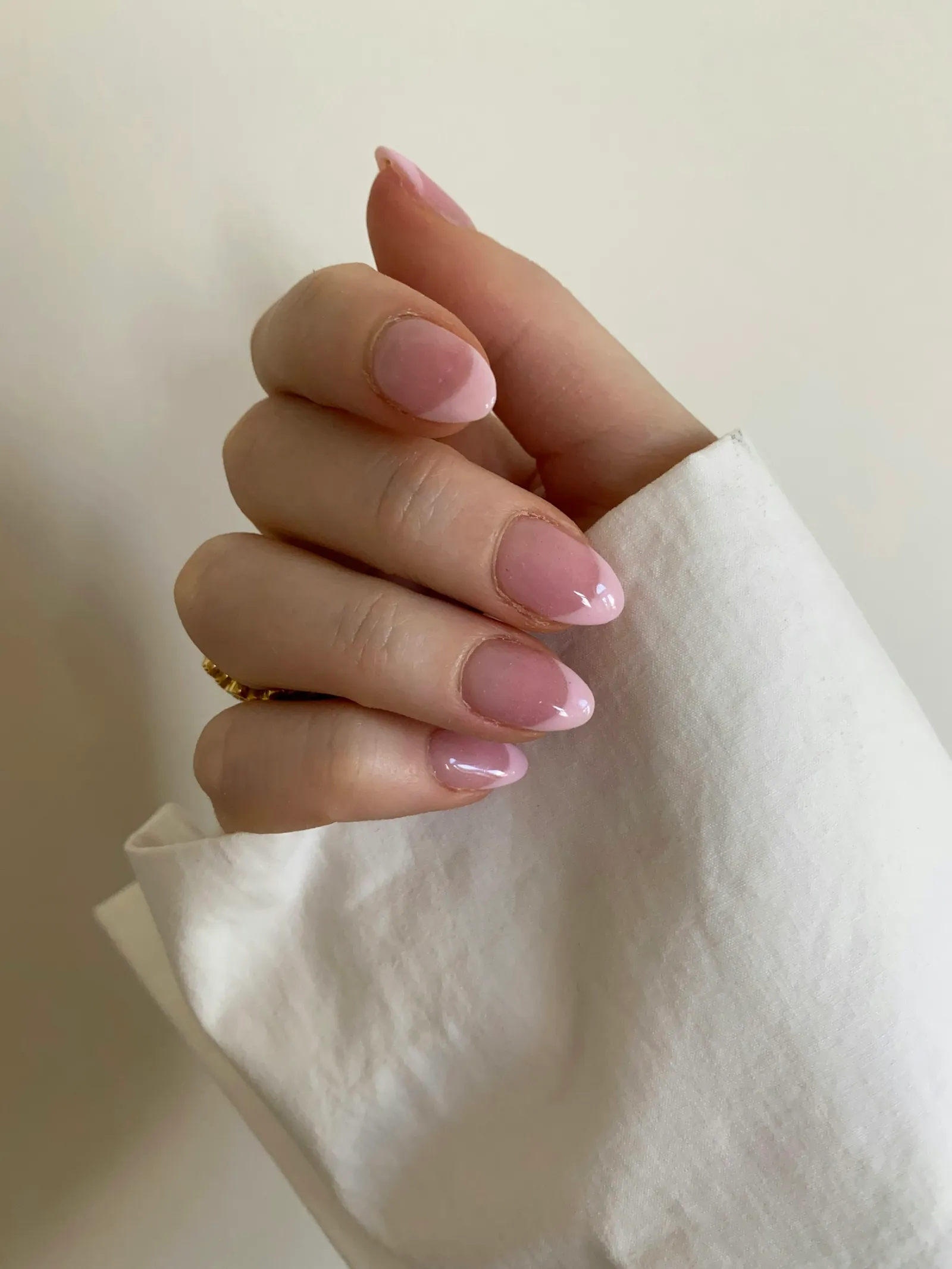
Japanese gel is a soft gel system known for a thin, self-leveling texture, dense pigment and a flexible cure. "Soft" means it soaks off with acetone rather than being filed away like a hard gel.
Because the formula is so pigmented, a shade often reaches full color in fewer, thinner coats. That keeps the overall layer slim, especially near the cuticle, where a bulky edge is the first thing people notice. The flexibility matters too: a thin, bendable layer moves with your natural nail instead of cracking away from it when you type, open a can or carry groceries.
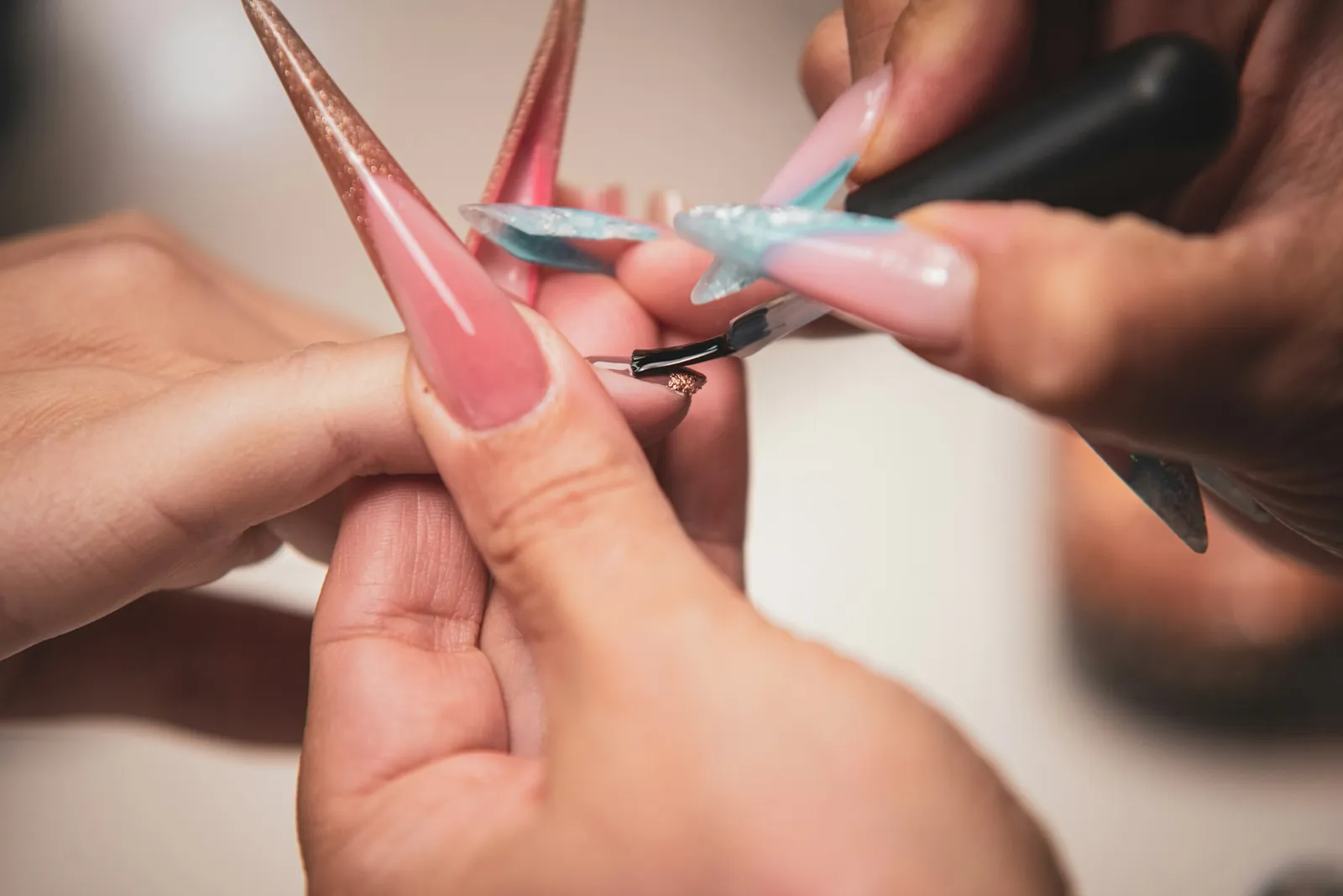
Japanese gel colors are often sold in small pots and applied with a fine brush, which is one reason nail artists like them for hand-painted detail. Thin lines stay crisp, and shades blend smoothly for gradients and soft effects.
Are Japanese gels HEMA-free?
Some are and some aren't. Formulas vary from line to line, and HEMA, a common gel ingredient known to cause allergic reactions in some people, appears in some Japanese gels and not others. If you have sensitivities, ask us which products we'll use for your service before we begin. If you notice itching, redness or swelling around your nails after any gel service, please see a dermatologist.
What counts as "regular" gel polish?
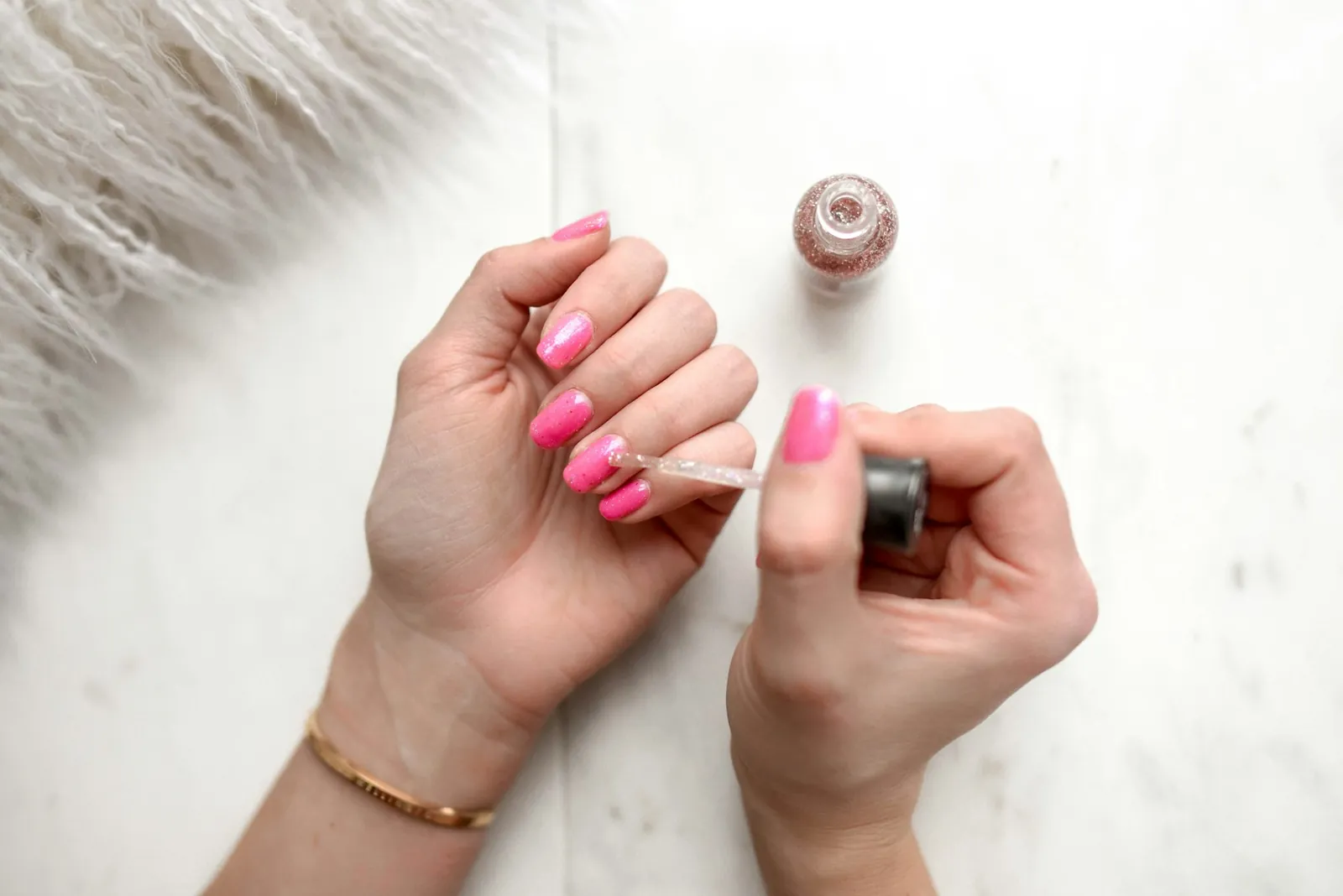
Regular gel is the standard soak-off gel polish that comes in a bottle with a built-in brush, the service most people mean when they say "gel manicure." It's applied as a base coat, two or so color coats and a top coat, with each layer cured under a lamp.
It's a great system. It cures quickly under the light, holds a high shine and typically wears about two to three weeks without chipping. Bottle formulas tend to be a bit thicker than Japanese gel, so the finished manicure can sit slightly fuller on the nail.
How do Japanese gel and regular gel compare?
The short version: Japanese gel trades a little more time and cost for a thinner, more flexible, more detailed result. Here's how the two compare in our studio.
| Feature | Japanese Gel | Regular Gel Manicure |
|---|---|---|
| Texture | Thin, self-leveling, flexible | Medium body, slightly fuller |
| Pigment | Dense; full color in fewer coats | Varies by shade; often 2+ coats |
| Typical wear | Often 3 weeks or more | Typically 2–3 weeks |
| Removal | Soak-off | Soak-off |
| Best for | Slim natural look, nail art, flexible nails | Quick, budget-friendly color |
| Time in chair | About 60 min | About 45 min |
| Price at our studio | $70 | $35 |
Does Japanese gel last longer than regular gel?
Often, yes, by about a week, though your nails and habits matter more than the label on the pot. Many clients wear Japanese gel three weeks or a little longer, while regular gel typically holds for two to three.
Wear time depends on a handful of things: how fast your nails grow, how oily or bendy your natural nail plate is, and how much you use your hands as tools. Precise prep at the cuticle and a sealed free edge (the tip of the nail) make a noticeable difference with either system.
Your habits at home count just as much. We put together a full manicure aftercare guide with the everyday steps that keep gel looking fresh until your next visit.
Is Japanese gel better for your natural nails?
It can be gentler, but mostly because of how it's applied and removed, not because of anything magical in the pot. Thin layers, minimal filing of the nail plate and patient soak-off removal are what protect your nails.
Any gel, Japanese or regular, can damage nails if it's peeled or picked off, because the top layers of the nail plate lift away with it. Aggressive buffing before application can thin nails too. A careful technician lightly removes surface shine instead of grinding down the nail.
One thing Japanese gel color doesn't do on its own is add real strength or length. If your nails are thin, peel easily or break before they grow out, a structured overlay may serve you better. Our explainer on what milky builder gel is covers that option, and our guide to builder gel vs. hard gel vs. Gel X walks through every enhancement on our menu.
What happens during a Japanese gel manicure?
Expect a slower, more detailed appointment than a standard gel manicure. A typical service looks like this:
- Consultation and shaping. We talk through your nail health, shade and shape, then file the free edge.
- Cuticle prep. The cuticle is gently pushed back and non-living tissue is cleared from the nail plate, so gel can sit close to the cuticle without lifting.
- Surface prep. Shine is lightly removed and the nail is cleansed so the base can grip.
- Thin base layer. The base goes on thinly and is cured under an LED lamp.
- Color layers. Pigmented color is applied in slim coats, each one cured.
- Top coat and finish. A glossy or matte top coat seals the free edge, followed by cuticle oil.
Hand-painted designs are added between the color and the top coat. For inspiration, our roundup of nail art trends we're loving in 2026 shows the kinds of sets we paint, from comic-style neon pop art to white iridescent.
Which one should you choose?
Choose Japanese gel if you want a thin, natural-looking finish, longer wear or detailed art. Choose regular gel if you want reliable color in less time at a lower price.
Japanese gel is a good fit if you:
- Prefer a slim, close-to-the-cuticle finish
- Want a little more wear between appointments
- Have flexible nails that tend to crack stiffer products
- Plan to add hand-painted nail art
Regular gel is a good fit if you:
- Want a fast, polished manicure on a lunch break
- Change colors often and prefer a lower price per visit
- Have healthy nails that already hold polish well
Still deciding between gel and something sturdier? Our comparison of dip powder vs. gel manicures explains when powder makes more sense.
Book your Japanese gel manicure in Port Washington
Our Japanese gel manicure is $70 and takes about 60 minutes. A classic gel manicure is $35 and takes about 45 minutes. You'll find every option on our full nail menu.
Book your appointment online or call us at (516) 883-5517. We're an easy stop from Manorhaven and the rest of the peninsula, and our hours and directions are always up to date.
Frequently asked questions
Can you get nail art with Japanese gel?
Yes. Japanese gel is a favorite base for hand-painted nail art because its dense pigment and thin texture hold fine lines, gradients and small details well. Designs are usually painted between the color and top coat, then sealed so they wear as long as the manicure itself. Bring a photo or describe the look you want, and we'll talk through what fits your appointment.
How is Japanese gel removed?
Japanese gel is a soft gel, so it's removed by soaking rather than being filed away. The top coat is lightly buffed to break the seal, then the nails are soaked or wrapped in acetone until the gel softens and slides off with a gentle push. Patient removal, and never peeling it off yourself, keeps the nail plate smooth and ready for your next set.
Is Japanese gel worth the extra cost?
For many people it is, especially if you want a slimmer finish, longer wear between visits or detailed art. You're paying for a more pigmented, flexible formula and a slower, more precise appointment. If you mainly want quick color that you change every couple of weeks, a regular gel manicure is a smart, budget-friendly choice. The best pick depends on your nails and how you use your hands.
Is Japanese gel good for weak or thin nails?
Japanese gel can be a kind choice for thin nails because it goes on in slim, flexible layers and soaks off without heavy filing. It doesn't add much structure, though, so it won't stop nails that bend or snap from breaking. If your nails are weak, a milky builder gel overlay adds strength first, and it can be finished with color for the same polished look.